How can we help you?

Councillors & Democracy

Should Worcester have more parish councils? Should there be a Worcester town council?
A photograph of Sta Andrew's Spire in Worcester, overlaid with the Future Worcester logo

How Worcester residents are represented at a local level is changing, and Future Worcester is aimed at gathering your views on how the city should be governed after 2028.

Worcestershire as a whole will move to new unitary council arrangements in April of that year. Worcester City Council will no longer exist, and its services will be run by another – much bigger – authority.

Alongside that process there is an opportunity to create a new, local parish or town council, or more than one such new local council.

Two parts of the city already have parish councils: St Peter's and Warndon Villages. But other Worcester residents would have no equivalent local voice unless new arrangements are created.

The map shows the areas in the city which have parish councils and those which do not.
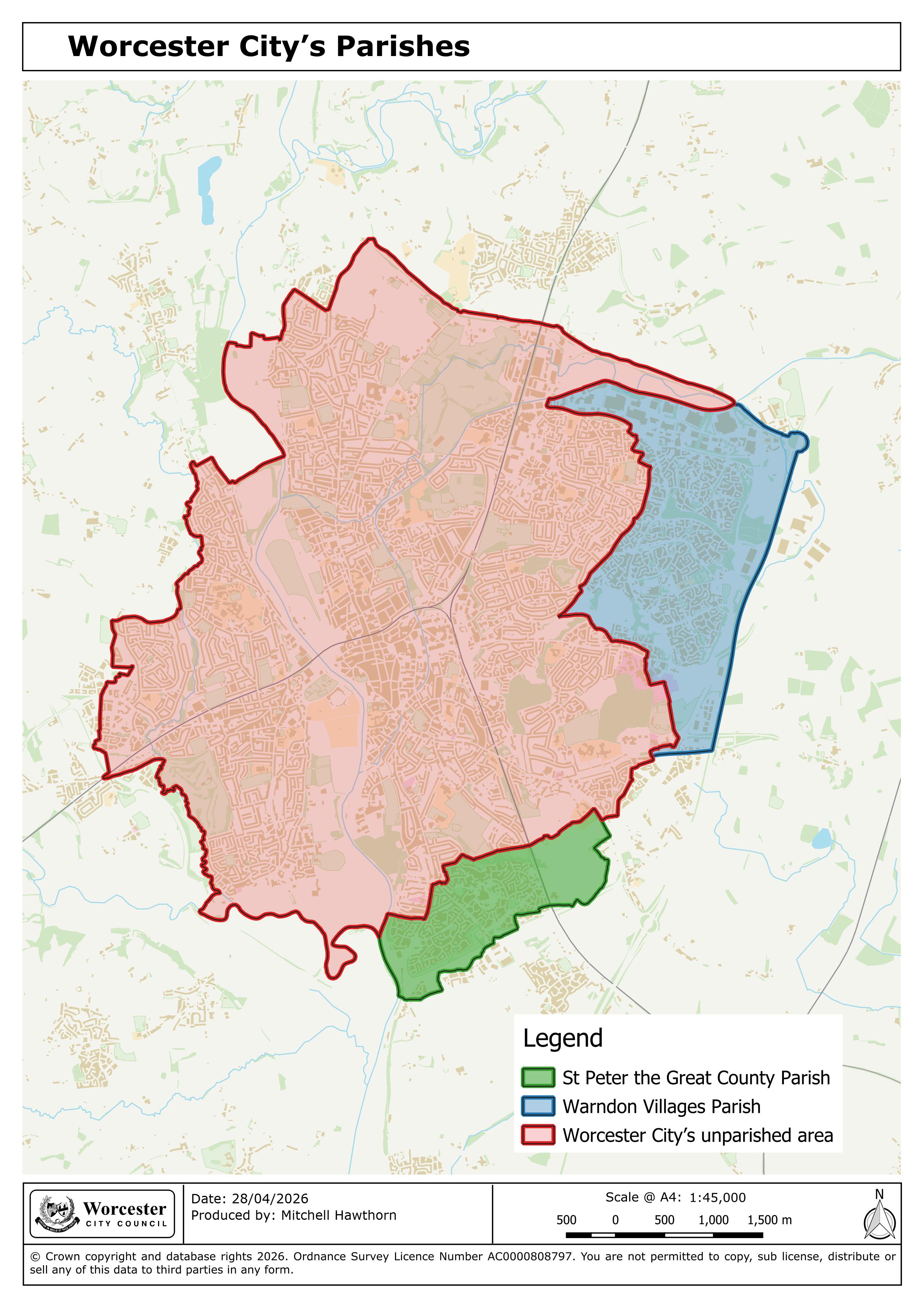
A map showing of Worcester, showing the area to the east of the city covered by Warndon Villages Parish Council (coloured in blue) and the area to the south covered by St Peter's Parish Council (covered in green). The remained of the city is coloured pink, indicating it is not parished.

To gather your views on how your community should be represented in the future, we are holding a two-stage Future Worcester consultation. It forms a legal process known as a Community Governance Review (CGR).

This is an opportunity to ensure that Worcester’s historic identity will continue.

Future Worcester will look at options including whether our city should have:

  • a single town council for the whole city,
  • a town council just for the currently unparished areas,
  • several smaller parish councils based on neighbourhood identity.

Your views will help shape how Worcester is represented locally for decades to come.

Phase one of Future Worcester closed on Monday 15 June. See the results of the phase one consultation.

Details of the phase two consultation will be announced soon.

Find out more

We have prepared a guidance document to give you more information about the Future Worcester process.

pdf Read the guidance document (473 KB) .

What happens next?

Worcester City Council is legally responsible for conducting this review. The Government recommends that local community governance reviews are held every 10–15 years. Worcester has not held one in that time, so the Council agreed on 24 February 2026 to conduct the Future Worcester exercise.

The results of the first phase of the consultation were reported to the City Council on 14 July 2026. The Council agreed its preferred option is a draft proposal to create a parish council for the City of Worcester. This option will be the subject of a second consultation in September 2026.

The City Council will then make a decision on the final recommendations at a meeting in late 2026.
How the Council operates

The Council has 35 councillors elected for a four year term. Councillors are democratically accountable to residents of their ward. The overriding duty of councillors is to the whole community, but they have a special duty to their constituents, including those who did not vote for them. Councillors have to agree to follow a code of conduct to ensure high standards in the way they undertake their duties. The Standards Committee trains and advises them on the code of conduct.

All Councillors meet together as the Council. Meetings of the Council are normally open to the public. Here Councillors decide the Council’s overall policies and set the budget each year, known as the budget and policy framework. The Council will elect the Leader of the Council, the Deputy Leader and the Chairs and Vice-chairs of Committees each year.

The Committees

The Council has a Committee form of governance which comprises Policy Committees and Regulatory Committees. The Policy Committees are responsible for implementing the budget and policy framework as agreed by full Council and decisions must be in line with the Council’s overall policies and budget. All members of the Council are entitled to a seat on one of the Policy Committees. The Policy Committees are the part of the Council with responsibility for most day-to-day decisions. Meetings of the Policy Committees will generally be open for the public to attend except where personal or confidential matters are being discussed. If a Policy Committee wishes to make a decision which is outside the budget or policy framework, this must be referred to the Council as a whole to decide. 

Financial and Performance Management and Scrutiny of Matters of Local Concern

Each of the Policy Committees has a role in monitoring the financial and performance of specific areas of Council business. In addition, the Policy Committees are able to undertake the scrutiny of matters of local concern outside of the functions of the Council. The Regulatory Committees are responsible for specific functions of the Council, for example planning and licensing. 

Audit and Governance Committee

The Audit and Governance Committee is one of the Council’s Regulatory Committees and it is a key component of the Council’s corporate governance. It provides an independent and high level focus on the audit, assurance and reporting arrangements that underpins good governance and financial standards. It is responsible for approving the Council’s annual statement of accounts.

Political Structure

Councillors are elected by local people to represent their community. Either two or three local city councillors are elected from each of the 15 areas of the city, or 'wards'. They work together to decide the council's priorities and how it should carry out its work. They also work to make sure that council services are delivered to you in the most efficient and effective way possible.

There are 35 councillors in total. Each one is elected for a term of four years. Elections are run by the Electoral Services team based at the Guildhall. Elections are held on a four-year cycle, with City Council elections held over three years and Worcestershire County Council elections taking place in the fourth year.

Decisions are made by committees. Membership of the committees reflects the political balance of the Council.

The councillors you choose to represent you, give up a lot of their time to serve the community, and most are paid a basic allowance of £6,095 a year (as of 1 April 2026).

The political balance of Worcester City Council 

Party

Number of seats

Labour Party

17

Green Party

11

Liberal Democrat

5

Reform UK

1

Independent

1

Current Worcester City Councillors

If you are not sure which ward you live in please check out My Local Area.

Leadership of the Council

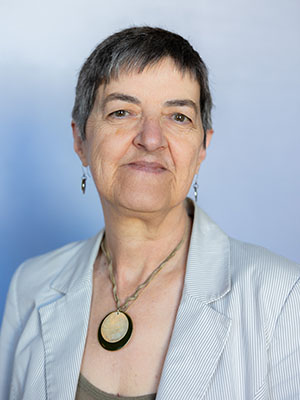
Councillor Lynn Denham - Leader of the Council

 Head and Shoulder photo of  Lynn Denham

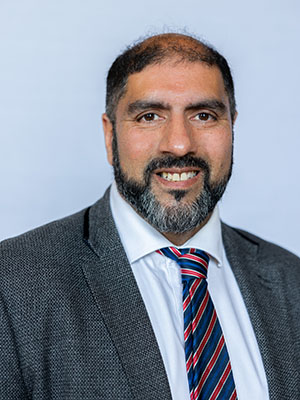
Councillor Jabbar Riaz - Deputy Leader of the Council

Head and Shoulder photo of Jabbar Riaz

The Committees

Policy and Resources Committee

What it does: top-level policy-making; preparation of a draft budget for recommendation to full Council; monitoring of the Council’s performance; oversight of contracts including revenues and benefits; oversight of the City Plan and the internal Transformation Programme

Chair: Councillor Lynn Denham  (Labour)
Vice-Chair: Councillor Alex Mace (Green)
Vice-Chair: Councillor Jessie Jagger (Liberal Democrat)

Communities Committee

What it does: Housing and homelessness; sport and leisure; museums, heritage and culture; community safety; health and well-being; CCTV.

Chair: Councillor Jabbar Riaz (Labour)
Vice-chair: Councillor Katie Collier (Green)

Environment Committee

What it does: Parks and open spaces; play areas; cemeteries and the crematorium; allotments; domestic refuse collection; trade waste; garden waste; street cleansing; car parking; oversight of Worcestershire Regulatory Services.

Chair: Councillor Zoe Cookson (Labour)
Vice-chair: Councillor Karen Lewing (Green)

Place and Economic Development Committee

What it does: Improvements to Worcester; economic development; planning policy; tourism.

Chair: Councillor Adrian Gregson (Labour)
Vice-chair: Councillor Hannah Cooper (Green)

Planning Committee

Chair: Councillor Karen Lewing (Green)
Vice-chair: Councillor Patricia Agar (Labour)

Licensing and Environmental Health Committee

Chair: Councillor Richard Udall (Labour)
Vice-chair: Councillor Karen Holmes (Liberal Democrat)

Audit and Governance Committee

Chair: Councillor Neil Laurenson (Green)
Vice-chair: Councillor Jill Desayrah (Labour)

Standards Committee

Chair: Councillor Sarah Murray (Liberal Democrat)
Vice-chair: Councillor Basharat Ali (Labour)

The Mayor of Worcester

  • The Mayor for 2026/2027 is Cllr Tor Pingree. The Deputy Mayor is Cllr Karen Holmes

The Mayor is the Civic Head of the Council. In May of each year, one of the Councillors is elected to serve as Mayor for one year and another is elected as a Deputy. He/she chairs meetings of the Full Council and represents the city at ceremonial occasions. The Mayor also welcomes international visitors and attends events organised by local people.

Your vote: make it count

If you want to play your part in the future of Worcester, then use your vote. By taking the time to vote in local elections, you can make sure that your voice is heard. The elected councillor will be the voice of your local community for the coming four years - so make sure you have your say.

To be eligible to vote in any elections you must be over 18 and your name must be on the Electoral Register which is updated annually. To enter your name you must complete the registration form which is sent to your home each year.

For more details please visit our Elections page.

Still can't find what you're looking for?

Contact us for help with services not available online.