How can we help you?

Planning Policy

Worcester City Council, Malvern Hills District Council and Wychavon District Council (the South Worcestershire Councils) will begin work on preparing a new local plan.

The following documents notify those with an interest in plan preparation of this intention and set out the anticipated plan making timetable, prepared in accordance with section 15B of the Planning and Compulsory Purchase Act 2004.

All data is provided under the Open Government Licence.

Notice of Plan Making

Names of planning authorities preparing the plan?

Malvern Hills District, Worcester City and Wychavon District Councils

Title of the Plan being prepared?

South Worcestershire Local Plan

The area covered by the Plan?

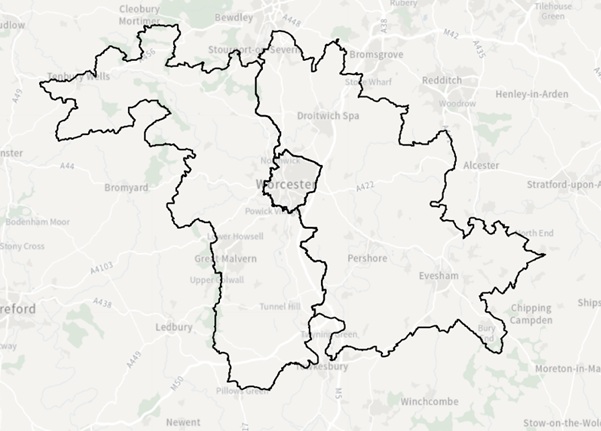
The administrative boundaries covered by Malvern Hills District, Worcester City and Wychavon District Councils.

Date of publication of this Notice?

30 June 2026

Link to timetable for plan preparation

Date the South Worcestershire Councils expect to start preparing the plan

31 October 2026

South Worcestershire Local Plan Call for Sites Consultation

As part of the emerging South Worcestershire Local Plan (SWLP), the South Worcestershire Councils (Malvern Hills District Council, Worcester City Council and Wychavon District Council) are now undertaking a Call for Sites. This will help to inform our evidence base of potentially suitable and available land, both previously developed land and greenfield sites, for a range of possible uses for consideration. This will run from Wednesday 19 August to Friday 30 October 2026.

Find out more and submit your site.

Supplementary Planning Documents (SPDs)

SPDs provide guidance on the implementation and delivery of planning policy set out in Worcester's Local Plan policies.

Shrub Hill Quarter SPD

On 22 July 2024, the Council’s Place and Economic Development Committee approved a Supplementary Planning Document (SPD) following public consultation undertaken earlier in the year. 

The City Centre Master Plan and the South Worcestershire Development Plan have designated Shrub Hill as an Opportunity Zone for new mixed employment and residential development. Worcester City Council and Worcestershire County Council - which is now the owner of the Shrub Hill Industrial Estate - are working collaboratively to plan for the regeneration of this area, building on its heritage, natural assets and rail connections. The two councils will be working with key landowners and occupiers and stakeholders to shape its future.

The SPD sets out a framework for future planning and investment decisions in more detail than the South Worcestershire Development Plan (SWDP) and suggests how development, when it comes forward, should take place in several Character Areas within the Quarter.

The SPD was formally adopted by a meeting of full Council on 17 September 2024 and now forms part of the Local Development Framework which sets the context for planning decisions in the city.

The SPD has now been updated to account for the changes in both national and local policy following the adoption of the South Worcestershire Development Plan Review (SWDPR) and updates to reflect the progress on-site to date since the adoption of the original SPD in 2024.

Developer Contributions SPD

This Developer Contributions SPD is an update to the SPD adopted in 2018 and sets out the SWC’s proposed approach to seeking developer contributions as required by SWDPR10: Infrastructure, generated by development proposals.

This document is intended to help all interested parties including developers, planning agents and the general public by providing clarification about when planning obligations will be expected and how developer contributions will be used.

It is a joint document for all three of the South Worcestershire Councils (SWCs), namely Malvern Hills District, Worcester City and Wychavon District.

Extensions and Alterations to Dwellings and Houses in Multiple Occupation SPD

This SPD provides guidance on the design of residential extensions and alterations, in line with SWDPR 05: Design and Sustainable Construction and SWDPR 28: Design of the South Worcestershire Development Plan Review (SWDPR 2026).

It emphasizes high-quality, context-sensitive development that respects local character, integrates with existing buildings, safeguards heritage and amenity, and supports sustainable design principles.

Renewable and Low Carbon Energy SPD

The Revised Developer Contributions SPD sets out guidance relating to the collection of developer contributions, to be used when determining planning applications.

Air Quality SPD

The Air Quality SPD provides supplementary guidance on the policies contained within the 2016 SWDP,  principally SWDP 31: Pollution and Land Instability.

It will ensure that air quality is taken into account during the planning process by aligning the consideration of air quality impacts and mitigation associated with development schemes.

Developers and applicants should use the guidance in this SPD to ensure that their proposals do not have a detrimental impact on air quality. It is a joint document for all three of the South Worcestershire Councils (SWCs), namely Malvern Hills District, Worcester City and Wychavon District.

The Air Quality Supplementary Planning Document was adopted on 8 July 2025. The SPD has now been updated to account for the changes in both national and local policy following the adoption of the South Worcestershire Development Plan Review (SWDPR) since the original adoption of the SPD in 2025.

Affordable Housing SPD

This SPD is on Affordable Housing which explains the details of policies set out in the South Worcestershire Development Plan Review 2021-2041 (SWDPR) that relate to the provision of affordable housing.

It is a joint document for all three of the South Worcestershire Councils (SWCs), namely Malvern Hills District, Worcester City and Wychavon District. It is a guide to the interpretation and implementation of these local policies and associated procedures, including each Councils’ Tenancy Strategies.

It is aimed at developers, landowners, registered providers, applicants for planning permission and others who are seeking to provide, or benefit from new affordable housing, and who therefore wish to interpret the policies in more detail.

The SPD was formally adopted by an Extra Ordinary Council Meeting on 29 June 2026 and forms part of the Local Development Framework which sets the context for planning decisions in the city.

Shopfronts and Signage Design Guide SPD

The Shopfronts and Signage Design Guide has been produced to help anyone wishing to make changes to a shopfront in Worcester, understand some important design principles, help explain what the city council considers to be key design and place making objectives and how the various stages of design and regulatory approval should be approached.

Information is included about what planning permission or other consents might be required, the component parts of historic shopfronts, and the key elements of good shopfront design.

The SPD has been updated to account for the changes in both national and local policy following the adoption of the South Worcestershire Development Plan Review (SWDPR).

Water Management and Flooding SPD

The Renewable and Low Carbon Energy SPD sets out guidance on how the requirements in Policy SWDP 27 relating to Renewable and Low Carbon Energy should be applied. It includes guidance on what must be provided in Energy Assessments; issues that need to be considered when examining the potential for decentralized energy and heat networks in large scale development proposals to comply with SWDP 27B; the various renewable and low carbon energy technologies and the planning issues associated with each technology that will need to be addressed.

Design Quality SPD

The Design Guide SPD covers the local planning authorities of Malvern Hills District Council, Worcester City Council and Wychavon District Council (known collectively as the South Worcestershire Councils (SWC).
 
The SPD provides additional guidance on how the SWDP design related policies should be interpreted, for example through the design and layout of new development and public spaces across south Worcestershire, and is consistent with the planning policies in the SWDP, in particular SWDP21 Design. It is aimed at built design professionals, e.g. architects, urban designers and developers but it will also be of relevance to anyone else with an interest in the delivery of quality residential design and public spaces.
 
The Design Guide SPD was formally adopted on Monday 5 March 2018.
 

Planning for Health in South Worcestershire SPD

The south Worcestershire councils adopted the Planning for Health SPD on 21 September 2017.  It provides more detailed guidance on the implementation of policies within the South Worcestershire Development Plan and sets out the requirements for Health Impact Assessment. 

SEA Screening Statement

Guidance

Cycling Storage Advice Note

This Advice Note provides helpful guidance to applicants for planning permission, their agents and planning officers, on the type of provision of cycle storage that is considered acceptable in different circumstances, with the aim of ensuring cycle storage is secure, convenient, inclusive (no matter the type of cycle transport used) and suitable for use throughout the year. The ability to secure the bike at home, at the workplace and when visiting other places is very important. Bikes can be very expensive, therefore owners are likely to want secure storage with natural over-sight for surveillance; storage that will keep the bike dry against the adverse weather conditions; as well as storage that is accessible by all users and is well connected to the road network as well as the dwelling/building they are visiting. 
 

Developer contributions refer to planning obligations delivered through Section 106 Agreements, Section 38 Agreements and Section 278 Agreements, as well as money collected through the Community Infrastructure Levy (CIL). These are planning tools that can be used to secure financial and non-financial contributions (including affordable housing), or other works, to provide infrastructure to support and mitigate the impact of development. Further details of each type of planning obligation is set out below.

Community Infrastructure Levy

The Community Infrastructure Levy (CIL) is a tariff-based charge that applies to some, but not all, new development in the City. The money generated through the levy will contribute to the funding of infrastructure to support development growth in south Worcestershire. The CIL has been jointly prepared by the three south Worcestershire councils of Malvern Hills District Council, Wychavon District Council and Worcester City Council, although each local authority has its own charging schedule. Full details regarding CIL including the charging schedule, how to calculate CIL,  and CIL monitoring reports can be found on our dedicated CIL webpage.

Section 106 Agreements

A Section 106 Agreement (S106) is a legally binding agreement that is negotiated between the Council and the developer/landowner to mitigate the impacts of development on a site-specific basis. They can be used to secure a financial contribution toward the funding of infrastructure, for example, the provision of open space, recreation facilities, education and highways, and can also include non-financial contributions, for example, the provision of affordable housing.

Section 106 agreements often require the financial contributions to be made prior to the project starting or in accordance with ‘trigger points’ as the development progresses. Unlike the Community Infrastructure Levy, which is a tariff on particular types of development, S106 is charged based on the specific needs of the local community.

Usually, planning obligations are formally registered as land charges, which means that if the development site is sold the planning obligation remains a legal agreement between the new landowner and the Council.

When S106 Agreements are used

When a planning application is submitted to the Council we will assess the application to consider whether the development would cause a significant impact to the area and community. The S106 will vary depending on the nature of the development and based on the needs of the City. The most common obligations include:

  • public open space
  • affordable housing
  • education
  • highways
  • city centre improvements

In accordance with the legal tests set out in Regulation 122 of the Community Infrastructure Levy Regulations 2010 (as amended) Section 106 agreements can only be used where they are:

  • necessary to make a development acceptable in planning terms
  • directly related to the development, and
  • related in scale and kind to the development

Further information and guidance about developer contributions can be found in the following supplementary planning documents.

Developer Contributions Supplementary Planning Document (SPD)

The Developer Contributions SPD (2018) sets out the South Worcestershire Councils’ approach to seeking developer contributions for infrastructure or environmental improvements required as a result of development. The SPD provides guidance about when planning obligations will be expected, the scale of developer contributions, and how developer contributions will be used.

Affordable Housing Supplementary Planning Document (SPD)

The Affordable Housing SPD (2016) covers the administrative areas of Worcester City Council, Malvern Hills District Council and Wychavon District Council.  It explains the details of the South Worcestershire Development Plan (SWDP) policies that relate to the provision of affordable housing.  It is a guide intended to help developers, landowners, applicants applying for planning permission, registered providers and others who are seeking to provide or benefit from affordable housing.

Section 106 Monitoring, Drafting and Legal Charges

The administration and monitoring of S106 planning obligations is a time-consuming and complex process, taking up a significant amount of officer time. It is essential that the system operates effectively and efficiently.

The Council has therefore decided to introduce charges from the 31 January 2019 to cover the cost of monitoring and drafting planning obligations. The charges were drawn up having regard to relevant national guidance and legislation. They were devised to be proportionate to the amount of work undertaken in relation to planning obligations by the Council and to the scale of development. The monies raised will be spent on costs relating to the administration and monitoring of planning obligations.

The charges are set out below and are payable on completion of each Section 106 agreement:

  • The base fee is £695
  • In addition to the base fee, a further administration fee will be applied at a rate of £108 per trigger point specified in an agreement

Any Legal Services fees associated with the drafting of the legal agreement will be in addition to the Administration and Monitoring Fee for Section 106 Agreements.

How S106 monies are allocated and spent (Infrastructure Funding Statement)

Recent changes to the CIL regulations have introduced greater flexibility in how Section 106 monies can be spent. For instance, Section 106 monies can now be pooled together from a greater range of planning applications to fund the same project alongside Community Infrastructure Levy and other sources of funding.

The Council has a dedicated S106 Programme Board who act as the decision-making body for the collection and spending of developer contributions made up of Officers within the Council.  The Board meets quarterly to review expenditure and to prioritise and identify potential projects and income from developer contributions.

The Council is required to publish details of income and expenditure from both S106 and CIL over the last financial period in an Infrastructure Funding Statement (IFS). This statement will be updated annually and replaces the Developer Contributions  Monitoring Reports that the Council has previously published on the monitoring page of the website. The statement will also identify the type of infrastructure and projects we intend to fund through CIL and Section 106 income over the next reporting period.

Section 38 and Section 278 Agreements

Section 38 and Section 278 Agreements are legal agreements that are entered into by a developer and the relevant Local Highway Authority, which in the case of Worcester City is Worcestershire County Council. Although highway matters will be negotiated as part of the planning process, the legal process between the developer and the County Council takes place after the planning application has been approved and the developer has submitted technical information to the County Council.

  • A Section 278 Agreement is a section of the Highways Act 1980 that allows developers to enter into a legal agreement with the Local Highway Authority to make alterations or improvements to a public highway.
  • A Section 38 Agreement is a section of the Highways Act 1980 that allows developers to enter into a legal agreement with the Local Highway Authority to have new highway infrastructure adopted and maintained at public expense.
The Houses in Multiple Occupation Supplementary Planning Document forms part of Worcester City's Local Development Framework (LDF). The document sets out guidance to be used when deciding planning applications for a change of use to Houses in Multiple Occupation (HMO).

The Council adopted the Houses in Multiple Occupation Supplementary Planning Document on 16 September 2014.

Copies of the document, consultation and adoption statement can be downloaded below:-

Still can't find what you're looking for?

Contact us for help with services not available online.