Where is it?
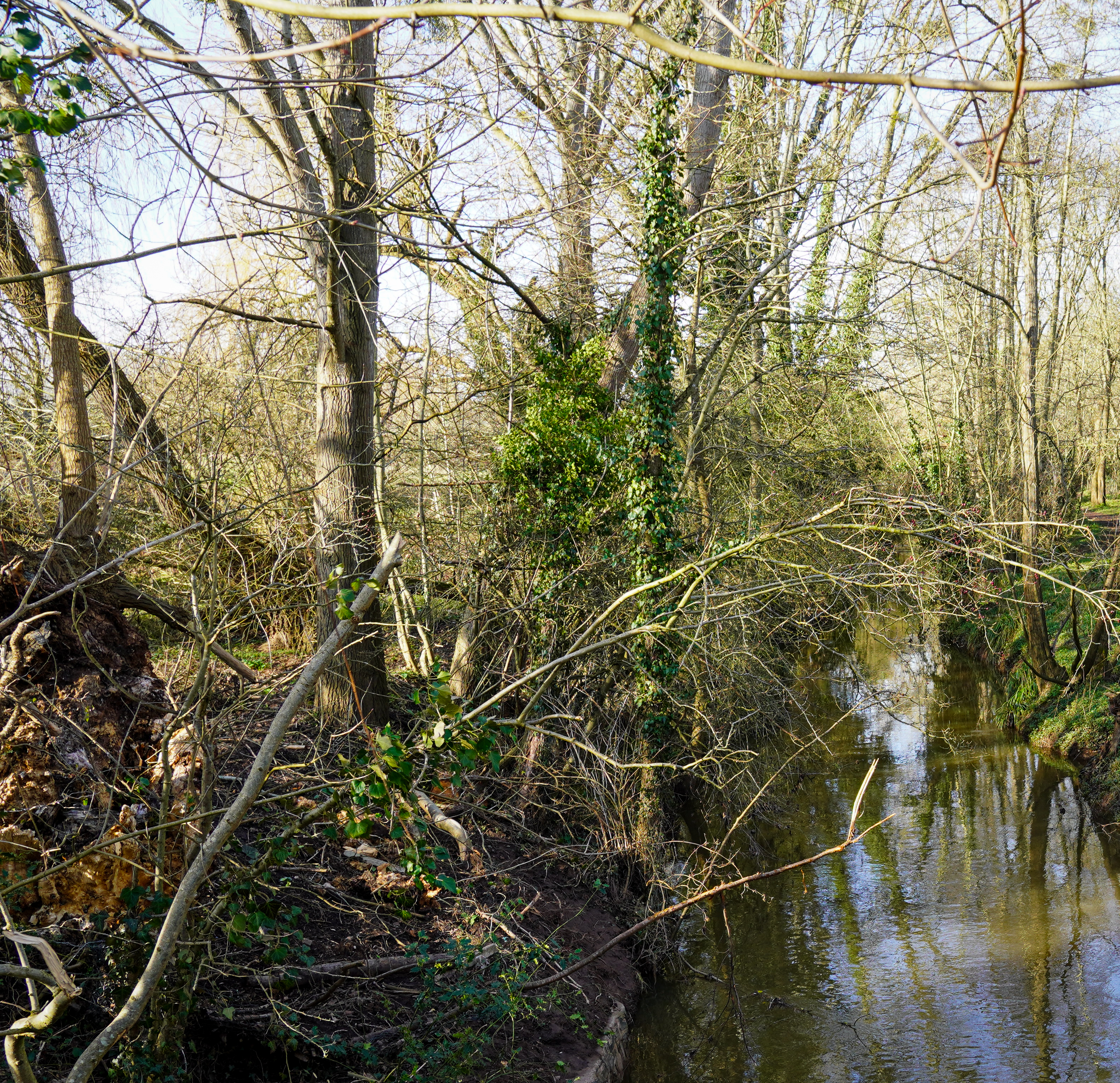
Laugherne Brook Meadow is in St. John’s Ward, between Broadway Grove and the nearby industrial estate, just north of the railway line and south of Meco Alley. Previously leading to a pedestrian rail crossing, it has been closed for several years due to concerns about safety and anti-social behaviour.
Since its closure the meadow has been unmanaged, and it is now overgrown with brambles and scrub.
What is Happening?
A wetland will be created by digging new ponds and making small changes to the banks of the brook itself. Some of the scrub will be cleared to allow the meadow to regrow, and new hedges will be planted.
Invasive Himalayan Balsam will be thoroughly cleared to stop it regrowing. Bird and bat boxes, reptile hibernation piles, and an otter holt will be created. The meadow will remain closed under the existing Public Space Protection Order.
Why a wildlife site?
The Meadow is part of the Laugherne Brook Nature Reserve. It is a diverse mixture of woodland, stream, and scrub, and has little disturbance from people, making it an ideal place for wildlife to shelter from a busy city.
How will it be paid for?
As part of planning permission for the Iceworks apartments, the developer was required to pay into a fund (known as a section 106 payment).
The money in this fund was agreed on condition that it must be used on this site.
When will it happen, and will it be disruptive?
Most work on-site will need to wait until Autumn 2026, to avoid disturbing the birds living there during the nesting season. No major disruptions such as road closures will be needed, though there might be some noise from machinery during normal working hours for several days.
How will it help wildlife?
- New water features will give animals like frogs and dragonflies a place to safely lay their eggs. Plants that rely on still water can start to grow.
- Different kinds of fish and insects need areas with different water-flow speeds and oxygen levels to thrive. Varying these in the brook will attract more species.
- Areas of grass and flowers create new sources of nectar for bees and butterflies, as well as somewhere for reptiles like slow-worms to bask in the sunshine.
How will it help people?
- Large ponds hold water, reducing the severity of flooding, while new plants on the banks of the brook reduce land erosion.
- Removal of invasive Himalayan Balsam will stop it spreading to properties nearby and downstream.
- More secure boundaries with fence repairs and new hedges will reduce the risk of trespassing.
- A better place for wildlife to live means more birds, bees, butterflies and flowers for people to enjoy all around Battenhall and St. Peters, and more pollinators in their gardens.
- City Centre Masterplan
- Planning Application Search
- Planning Weekly Lists
- Planning Advice
- Environmental Impact Assessments
- Making a Planning Application
- Planning Application Process
- Planning Committee
- Planning Enforcement
- Planning Appeals
- Historic Environment
- Natural Environment
- Building Control
- Planning Policy
- Land Searches and Charges
- Street Naming and Numbering
- Brownfield Register
- Self Build Register
- List of assets of community value
- Hazardous Substance Register
- Public Path Orders
- Design Review Service